
Table of Contents
Linked Repeaters
There's several ways to link repeaters together. Links are typically made using RF or internet linking. The following descriptions were copied from Repeater Builder as they quite nicely describe RF link options.
The 'best way' to link repeater sites is really dependent on the situation and personal preference, so instead of giving you the 'best' way, I'll give you a few examples of how it can be done and you can decide what it the best for your situation. This article assumes you will be linking amateur repeaters, but the procedures could be followed to link commercial sites as well; assuming you are within the rules of the particular commercial service.
The “Remote Base” type link system is the most common because of its simplicity and low cost. The term “Remote Base” comes from the situation that you are installing a base station that will be controlled remotely. Basically a simplex radio (old hand held or mobile rig) is connected to a repeater that you want linked to another. This Remote Base radio need not be duplex because of the way the link and repeaters are configured. The remote base radio will need to be on the same Band, Frequency, Split, and PL as the repeater you are linking to and will be a “user” of the destination repeater. Remote Base operations can be carried out on any amateur voice band, even HF! Full Time Links below 2M should be used on a part time basis, however Remote Base operation is left to individual and local interpretation.
The remote base linking can be a single destination repeater, or multiple destinations can be set up, with a “hub” system that all the remote bases talk to. Think of the remote bases as “spokes” to the “hub.
Commonly, when deploying a FM link SYSTEM that will be * ON * full time - a repeater on 222.15 MHz or above is positioned in the center of the desired coverage area and is designated to be the “HUB” (the Hub frequently is on a different band from the “outboard” repeaters). The Hub is the main repeater in the system. You can remote base, or “link”, as many “outboard” or “spoke” repeaters into the hub as you wish, providing you have a good RF path to the hub from each of the outboard repeater site(s). All ID's from the hub are heard through the entire system, so if you like voice ID's, they need only exist on the hub. Since you can disconnect or “un-link” any repeater from the system, all outboard repeaters should have their own controller with ID. This controller needs to have 2 ports, one for the repeater and one for the remote base radio.
The above portion adapted from Repeater Builder website
CVARA Repeaters
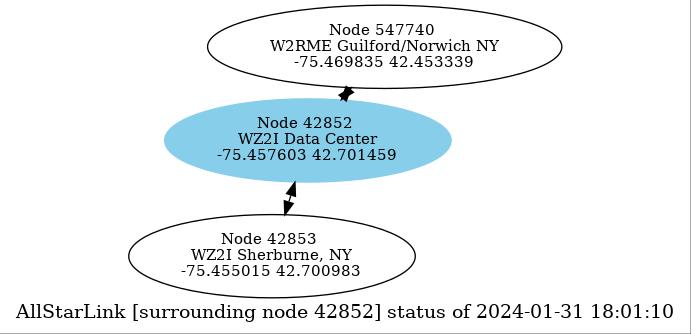
We currently operate 2 repeaters at our club site. These repeaters are linked together and testing is being done to link them to other repeaters around Central New York. Our club repeaters are connected to the AllStarLink network via the internet. We utilize a “Cloud-Hosted” AllStarLink node to act as a hub for the internet linked portion of the system. This hub is noted below
| Location | Repeater Call | Frequency | Notes |
|---|---|---|---|
| Guilford | W2RME/R | 146.685 MHz (-) 110.9Hz | AllStar Node 547740 Hamshack Hotline: 94139 |
| 443.600 MHz (+) 110.9Hz | AllStar Node 547740 HamShack Hotline 94142 |
||
| “The Cloud” | WZ2I | WZ2I Cloud-Hosted Hub | AllStar Node 42852 |
Nets
There are several nets held around our area. All times below are local time, unless otherwise noted.
| Name | Time | Repeater |
|---|---|---|
| CARES Net | Wednesdays 7:30pm | W2RME/R |
| OCTEN | Daily 8:00pm | W2MO 145.170 Satellite Checks on W2RME/R & W2SEU 146.850 sometime between 7:45 & 8:15 |
| Otsego CARES | First Sunday 8:00pm | W2SEU |
| Oneonta 2m Round Table | Third Sunday 8:00pm | W@SEU |
| Oneonta 10m Round Table | Wednesday 7:00pm | 10m 28.375 |